
The "future risks" that language barriers pose to businesses

Communication errors lead to decreased work efficiency and quality.
As the number of foreign workers increases, a major challenge companies face is communication breakdowns due to language differences. The cause is not simply a lack of Japanese language proficiency, but rather "ambiguous instructions" and "differences in understanding levels." Expressions such as "as quickly as possible" or "a little more forcefully" are difficult for foreigners to understand, leading to delays and errors in work. As a result, this often leads to a decline in quality, increased workload on the factory floor, and dissatisfaction among employees. To prevent these problems, education and systems that take language differences into account are essential.
Safety risks — Mistakes in instructions or misunderstandings could lead to accidents.
Language barriers pose a significant risk of reduced safety. In manufacturing, construction, logistics, and other workplaces, miscommunication of safety instructions can lead to accidents. Difficulty understanding words like "danger" and "stop," as well as technical jargon, increases the likelihood of incorrect actions. Furthermore, manuals and instructions written only in Japanese can easily lead to misunderstandings, and the inability to say "I don't understand" can result in work continuing uninterrupted. Many of these accidents are preventable, making multilingual support, simplified Japanese, and video-based training crucial measures.
Risk of decreased turnover and retention rates — Stress, feelings of alienation, and lack of understanding make it easier to quit.
Language barriers significantly impact not only work performance but also the turnover rate of foreign workers. In an environment where communication is difficult and workers cannot seek help when they encounter problems, stress and feelings of isolation increase, leading to a feeling of being "unnecessary" and ultimately, early resignation. Furthermore, a vicious cycle can easily develop where workers make repeated mistakes due to pretending to understand, leading to further reprimands. Even individuals who are expected to be long-term employees may not stay if language challenges are left unaddressed, resulting in wasted recruitment and training costs. Providing appropriate education and support can lead to improved retention rates and increased productivity.
Why is "being able to speak Japanese" not enough?
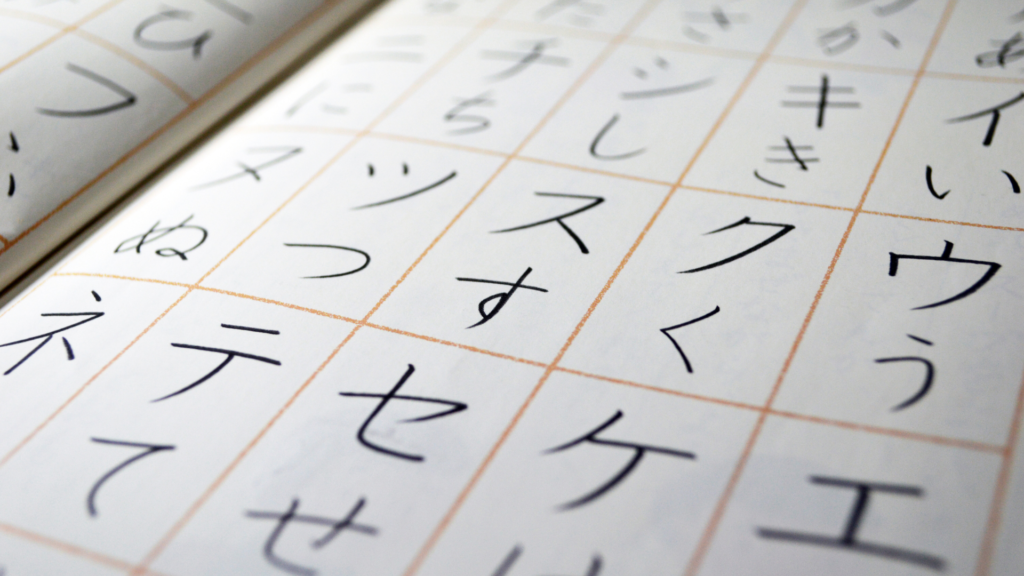
The gap between textbook-level Japanese and Japanese used in practical business situations (honorifics, technical terms, industry jargon, etc.)
Many foreign workers learn basic Japanese before coming to Japan, but they often have limited opportunities to use the language in practice or their understanding is insufficient. In the workplace, industry-specific expressions and abbreviations are frequently used, adding to the burden on those who haven't yet fully grasped the basics of Japanese, thus prolonging the learning process. Furthermore, ambiguous expressions like "Could you please do...?" can be difficult to interpret as instructions or requests, leading to misunderstandings. Rapid speech and abbreviated conversations are also difficult to understand, and pretending to understand can lead to mistakes. Therefore, simply being able to speak Japanese is insufficient; education directly relevant to practical work is crucial.
The problem of "unspoken Japanese understandings" being difficult to understand due to differences in culture and values.
A major reason why foreign workers are confused is not only the language, but also the uniquely Japanese "unspoken understandings." Cultures such as "reading the atmosphere" and "acting based on unspoken understanding," as well as ambiguous expressions like "as soon as possible," are difficult for many foreigners to understand and can lead to actions that are not intended. In addition, the culture that emphasizes hierarchical relationships makes it difficult to ask questions, and they may end up working without understanding, leading to mistakes and accidents. These cultural differences can also cause stress and lead to employees leaving the company, so it is important for companies to clearly communicate the rules.
What's needed is a system that doesn't leave the "language barrier" unaddressed — concrete measures for solving it.

Implementation of in-house Japanese language education and basic Japanese language training.
Providing in-house Japanese language training for foreign employees is an effective way to overcome language barriers. However, it's often difficult to cover the specialized terminology and instructional expressions needed on the job. Therefore, it's important to prioritize teaching vocabulary and expressions directly related to the work. Furthermore, using simplified Japanese that is "short and easy to understand," and having Japanese staff use Japanese that is easy for foreign employees to understand, can reduce misunderstandings of instructions. In addition, learning from the basics of Japanese through videos and e-learning allows for learning during spare time, leading to improved comprehension and retention rates.
Development of multilingual manuals and safety instructions (including diagrams, illustrations, and simplified Japanese).
To improve the understanding of foreign workers, it is crucial to develop multilingual manuals and safety instructions. Misunderstandings of work procedures can lead to accidents and decreased quality, so materials that combine "easy Japanese," "illustrations and photographs," and "multilingual translations" are effective. Procedures with pictograms and photographs make them easier to understand visually. Also, making the Japanese version concise makes it easy for everyone to understand. Furthermore, digitizing them with videos and apps makes updates and sharing easy, leading to improved safety and work efficiency.
Supporting daily communication through the introduction of interpretation/translation services, translation apps, chat tools, etc.
On-site communication often involves giving instructions and reports that need to be conveyed accurately on the spot, which can easily lead to misunderstandings for foreign employees. Therefore, utilizing multilingual tools such as translation apps and chat tools is crucial. Voice and image translation allows for immediate understanding of the content and improves the speed of communication. By creating such an environment, anxiety for both parties is reduced, leading to a more comfortable work environment and increased productivity.
A platform for cultural understanding and intercultural exchange, and a support system through a mentoring program.
To overcome language barriers, it's crucial to reduce misunderstandings caused by differences in culture and values. Foreign workers often struggle with unique Japanese workplace rules, communication practices, and hierarchical relationships, which can lead to isolation and resignation if left unaddressed. Therefore, it's necessary to provide opportunities for cross-cultural understanding training and exchange to deepen mutual understanding. Furthermore, enabling them to communicate in basic Japanese creates an environment where they feel more comfortable seeking advice, reducing anxiety. These efforts also contribute to improved retention rates and a greater sense of unity in the workplace.
The seriousness of the "language barrier" as seen through real-world examples and data.

Data shows that approximately 36.31 TP20T of foreigners working in Japan cited "language differences" as a barrier to employment.
According to a survey, approximately 36.3% of foreign workers in Japan perceive "language differences" as a major barrier. The problem isn't a complete lack of Japanese language skills, but rather the gap between the Japanese required in the workplace and the language they use. Technical jargon, ambiguous expressions, rapid-fire instructions, and kanji-centric signage are difficult to understand, leading to misunderstandings and mistakes. Furthermore, an environment where it's difficult to ask questions can lead to accumulated errors, increasing the risk of quality decline and accidents. Language barriers are a critical issue affecting productivity, safety, and retention rates, making it essential for companies to create effective systems to address them.
Recent Employment Survey: The Increase in the Number of Foreign Workers and the Challenges Companies Face.
The number of foreign workers is increasing, projected to reach approximately 2.04 million in 2023, about 2.5 times the number in 10 years. However, companies' systems for accepting them are insufficient, and many companies feel anxious about language and cultural differences. Many challenges are observed, such as instructions not being understood, manuals not being understood, misunderstandings, isolation, and early turnover. In particular, discrepancies in perception, such as "I thought it was understood, but it was actually misunderstood," can lead to accidents and a decline in quality. Going forward, education and the development of systems related to language and culture are essential.
So what do we do? — The solution offered by "Plat Clover" as a platform.
What is Plat Clover? Plat Clover is an e-learning platform that allows you to systematically acquire Japanese language skills, business Japanese, industry terminology, and knowledge necessary for working in Japan, anytime, anywhere.
Platt Clover is a learning platform that combines e-learning, which allows users to acquire Japanese language skills step-by-step from the basics, with online consultations. In addition to a curriculum that systematically teaches everything from the very basics of hiragana and katakana to elementary-level everyday conversation, it also provides informational content on "Japanese for Daily Life" and culture and customs, allowing users to acquire the knowledge necessary for living in Japan. The learning content utilizes apps and animations, making it easy to continue learning anytime, anywhere. Online consultations are also conducted at key learning milestones to check understanding and provide follow-up. Furthermore, the platform has well-established operational mechanisms such as multilingual support and progress reports, providing an environment where users can learn at their own pace from the basics.
Advantages that differentiate it from typical Japanese language schools: You can study while balancing work, learn practical Japanese relevant to the workplace and business Japanese, and enjoy the flexibility of online learning.
Furthermore, many Japanese language schools require students to attend classes in person, which presents a challenge for foreign workers with shift work schedules, making it difficult to continue learning. On the other hand, Plat Clover offers entirely online learning, allowing students to study at their own pace during free time after work, on weekends, or while commuting. Online consultations with Japanese language teachers are also provided as an output tool, allowing students to actually use Japanese in their studies. A major advantage is that it allows students to continue learning while balancing work, without being bound by time or location.
Benefits for businesses: Reduced training costs, improved employee retention, enhanced safety and efficiency, and support for legal compliance.
The introduction of Platt Clover not only supports the education of foreign workers but also brings significant benefits to companies. Because the learning materials are completed online, the burden of on-the-job training and the costs of interpretation and training can be reduced, making education costs more efficient. In addition, a well-structured learning environment increases a sense of security and motivation to grow, which helps to prevent employee turnover. Furthermore, by building a strong foundation in Japanese, employees' understanding will deepen, which is essential for communication and work.
Summary — The "language barrier" is a solvable challenge. Now is the time to invest.

Leaving it unattended will increase costs and risks, but it can be solved through systems and learning.
With the increase in foreign workers, the "language barrier" has become a critical management issue for companies. If left unaddressed, it can lead to significant losses such as miscommunication, decreased quality, safety accidents, and increased employee turnover. However, language problems are also areas that can be improved through education and systems. It is effective to gradually implement measures such as using simplified Japanese, multilingual manuals, introducing tools, and promoting cultural understanding. The important thing is for companies to proactively create an environment where communication is effective. Addressing the language barrier can be considered an important investment that supports talent utilization and corporate growth.
By utilizing PlatClover, a win-win situation can be created for both companies and foreigners.
Now that employing foreigners is commonplace, companies are required to have a post-hiring training system. Platt Clover is an e-learning program that systematically teaches the basics of Japanese, everyday conversation, and Japanese for living in Japan. It can be taken anytime, 24 hours a day, making it easy to balance with work. By solidifying the "basics," it leads to an ability to understand instructions at work. Companies can also manage progress and proceed with training while monitoring the effectiveness of the education. This leads to a reduction in accidents and mistakes, retention of employees, and cost reduction. It is a system that benefits both parties, as it deepens understanding and makes it easier for foreigners to work.
\ Try it for free first! /
Sign up for a free trial/demo at Clover Academy's Plat Clover.
We support the retention and success of your foreign employees. Please experience our Japanese e-learning service developed by Clover Academy, which has over 33 years of educational experience.
Sign up for a free trial →* After you apply, a representative will contact you.
 English
  Japanese
  Chinese
  Vietnamese
  Nepali
  Korean